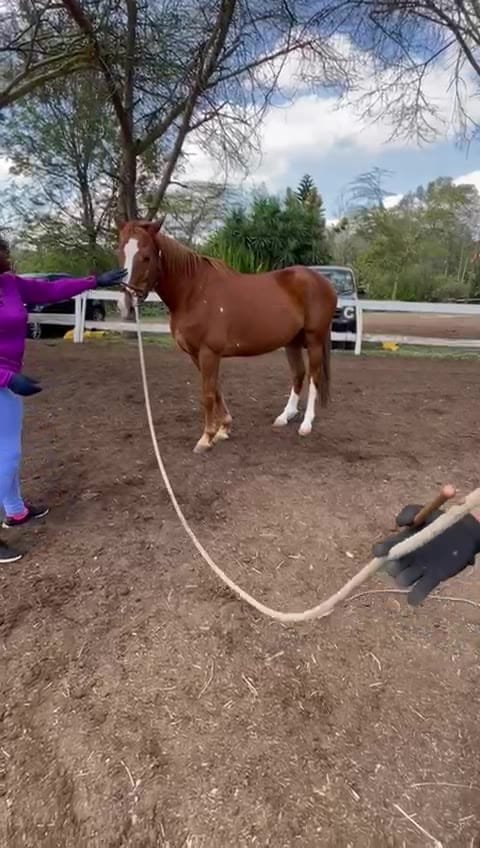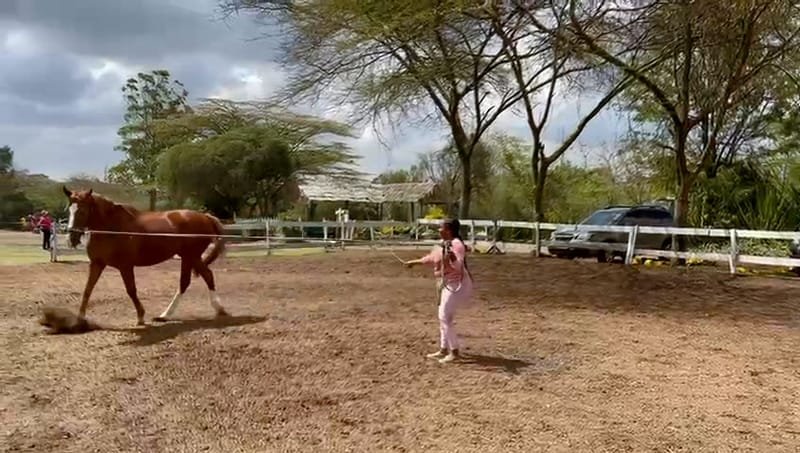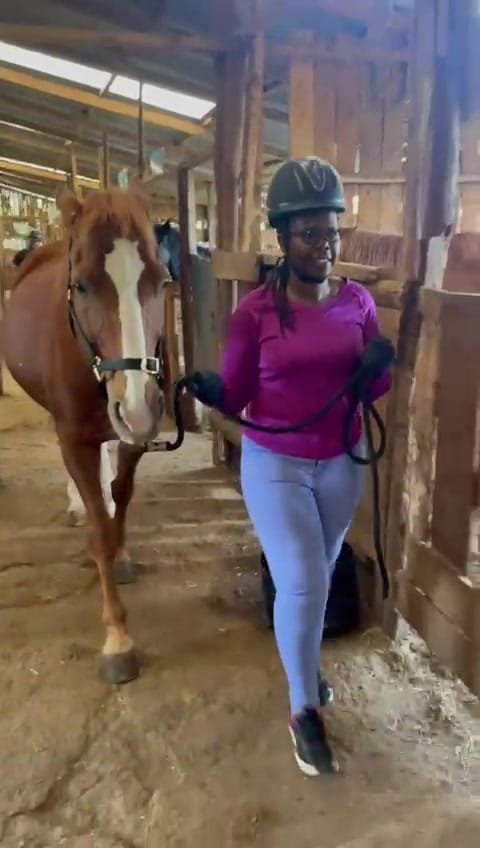
A student walks beside a chestnut horse across the arena, the lead rope hanging slack between them
Hardy Stud · Karen, Nairobi

Leadership can’t be taught in a classroom.

An 8-day leadership and resilience academy in Kenya, powered by horses, wilderness and purpose. For students aged 14 to 18.

Book a 15-minute callDownload the brochure

Not a school? Retreats for universities and teams Safari and culture journeys

We don’t teach leadership. We reveal it.

A horse weighs many times what a student does, and it cannot be bullied or bluffed. It follows calm, clear intent and nothing else. Step into the round pen and titles stop mattering: what’s left is how you actually lead.

Over eight days, the herd at Hardy Stud, the wild of Tsavo and a dhow on the Indian Ocean each ask the group to lead something real.

Day 1 starts in the round pen ↘
A student grooms a chestnut horse in the stables at Hardy Stud
Before the round pen: grooming
Leading, not riding
A facilitator coaches a participant beside a horse in the arena
Coaching, beside the horse

Why schools choose Hoofbeat over a regular safari

On a regular tripOn the Hoofbeat academy
They remember nothing.
They meet themselves.Horses mirror how you lead. Students see their own leadership style in real time, and work on it.
Comfort, all the way.
Tsavo tests them.An early hike across the Shetani lava flows teaches what to do when the path isn’t clear.
Nothing to show for it.
Impact that lasts.A pre-trip workshop, an 8-day journal and a certificate with an impact report: 30 CAS hours, with Service and Leadership outcomes mapped.

Eight days. Three grounds.

Red earth, black lava, white sand. Each ground asks a little more of the group than the last, and each day ends with a question in the journal.

A student leads a bay horse through a pole exercise

Days 1–3 · Hardy Stud, Karen

The Lab

Trust and non-verbal communication, taught by the herd.

Journal, day 2When did your horse stop following you, and what were you doing just before?

The Lab
The Shetani lava flow below the Chyulu HillsPhoto: Ninara, CC BY 2.0

Days 4–5 · Tsavo West

The Wild

Resilience under pressure, from the SGR to the lava flows.

Journal, day 5The trail changed. What did you do in the first ten seconds, and who did you look at?

The Wild
Dhows under sail on the Kenyan coastPhoto: Thukuk, CC BY-SA 4.0

Days 6–7 · Diani Beach

The Balance

Global citizenship on the water, and rest as a leadership skill.

Journal, day 7Who did the crew rely on today that nobody thanked?

The Balance
  1. Day 1Karibu Kenya, Nairobi
  2. Day 4The train to Tsavo
  3. Day 5Shetani and Mzima Springs
  4. Day 6Down to the coast
  5. Day 7Marine leadership and graduation
  6. Day 8Ukunda to Nairobi
All eight days, day by day

Horses don’t lie.
They show you how you lead.

A horse responds to body language, boundaries and honesty, not to titles or talk. So it works like a mirror: in seconds, students see whether people follow them because of force or because of trust.

A dark bay horse at Hardy Stud looks straight at the camera over a wooden rail, ears forward
By the round pen, Hardy Stud

How to read a horse

Ears turned to youCommunication
You have its attention. Lose your focus and the ears drift away within seconds. Students learn what their own attention looks like from outside.
Head drops, it licks and chewsEmpathy
The horse has relaxed around you. It only happens when your breathing slows and your pressure eases: a lesson in reading someone else first.
It walks into your spaceBoundaries
You haven’t shown where your space ends. Clear, calm and consistent works. Shouting and pulling never do.
Holding a boundary

No riding. Just leading.

Equine-assisted learning is used by business schools and military academies to teach presence and influence. Nobody gets on a horse. Students work on the ground beside calm, trained horses, never stallions, with a facilitator holding every session.

No riding experience is needed, and any student can step back and observe at any time. Observation counts.

Facilitated by Yolanda Sing, certified equine-assisted learning practitioner

A handler stands at eye level with a bay horse in the paddock
Eye level
Asking, not pulling

Safety isn’t an add‑on. It’s page one.

For heads, trip leaders and parents: read every risk assessment and our safeguarding policy before you sign anything.

  • AMREF Flying Doctors evacuation cover, 24/7Active for every participant, on every leg.
  • One adult to every eight studentsFemale staff on every trip with female students. Two adults with a student, always.
  • Wilderness First Responder on every tripPlus a certified first aider and a full kit.
  • Every adult is vettedKenyan staff hold a Certificate of Good Conduct, renewed yearly. The UK team holds Enhanced DBS.
  • KATO member, TRA licensedKenya Association of Tour Operators; Tourism Regulatory Authority.
  • Live location sharing with your lead teacherAny incident reported to the school within two hours.

One price for everything on the ground

No hidden fees. Your school books international flights; we take care of everything from arrivals to the flight home.

From $3,150per student

All-in ground package, minimum 12 students.

  • 7 nights in premium lodges
  • SGR first class, and the Diani to Nairobi flight
  • All meals, park and conservancy fees
  • Certified equine-assisted learning facilitation
  • Workbook, journal, certificate and impact report
  • AMREF cover, first aider, 1:8 ratio
  • Pre-departure workshop and post-trip debrief
  • One teacher free for every 12 students

Not included: international flights, visas, travel insurance and personal spending.

Class

First, SGR

Route

Karen, Tsavo, Diani

Departures

January to December 2027

Hold your dates
A bay horse waits in its stable at Hardy Stud
Your group’s first partner

Life at Hardy Stud

The ranch the academy calls home: a working stud in Karen with show jumping, young riders, community days and a herd that teaches. The riding you see here is the stud’s own. Academy students stay on the ground.

A rider clears a fence on show day at Hardy Stud
Show day
A young rider grooms a chestnut horse
Morning grooming
A rider clears a show jump
Show jumping
Young riders on ponies, each led by a handler, cross the yard at Hardy Stud
On the lead rein
A young rider on a chestnut horse with an instructor in the yard
First lessons
A visitor stands proudly with a chestnut horse
New friends
A rider with a rosette in the show ring
Rosette
Two young riders wave from horseback on a trail
Trail day
White-railed paddocks at Hardy Stud below the Ngong Hills
The paddocks, below the Ngong Hills

Scroll sideways for more

From first call to graduation, in six steps

  1. A 15-minute callLearning outcomes, risk documents and 2027 availability.
  2. Provisional holdWe hold your dates while you get approval.
  3. Parent webinarFamilies meet the team and ask anything.
  4. DepositYour booking is confirmed.
  5. Forms and pre-departure workshopMedical, dietary and consent forms; a virtual session with students.
  6. Eight days in KenyaThen a debrief back at school.

Questions schools ask us

Can’t see yours? Ask it on the call.

A group listens beside a horse in the arena at Hardy Stud
Ask anything
Does it count towards IB CAS and the Duke of Edinburgh’s Award?
Yes. The academy provides 30 CAS hours with Service and Leadership outcomes mapped, and supports Duke of Edinburgh’s Award goals. Every student leaves with a leadership certificate and an impact report for university applications.
Do students ride the horses?
No. All the work with horses happens on the ground: leading, groundwork and observing the herd. Nobody gets on a horse.
How do you keep students safe around wildlife in Tsavo?
Every walk and game drive has a KWS-licensed guide and an armed ranger. The hike runs between 7 and 9am on a cleared trail and is cancelled above 32 °C. Nobody swims anywhere in Tsavo, and vehicles keep at least 25 metres from wildlife.
What if a student can’t swim?
Non-swimmers wear a red wristband, stay inside the dhow rail and take part in a beach-based marine activity instead of snorkelling, with staff close by at the water’s edge. Everyone wears a life jacket the whole time on the water, and we only sail when the sea is calm.
Who looks after students at night?
Staff sleep separately from students and no adult enters a student’s room alone. Every lodge has a night supervision rota, and curfew is followed by room checks: 9pm in Tsavo, 9:30pm in Diani.
Can you run it for universities or adults?
Yes. A version for universities and corporate teams is available.
What about dietary and medical needs?
Fully accommodated. A medical and dietary form goes to every family after booking, allergies are flagged to every kitchen before the group arrives, and separate meals are prepared where needed.

Bring your next leadership trip to life in Kenya.

A 15-minute call. We’ll walk you through the risk documents, the learning outcomes and availability for 2027.

Book your discovery call

We reply within one working day.