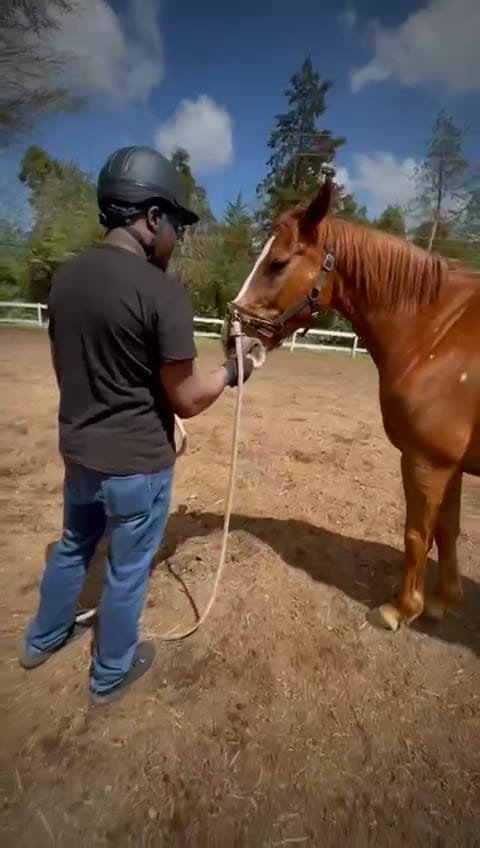
Ears turned to you
You have its attention. Lose your focus and the ears drift away within seconds. Students learn what their own attention looks like from outside.
At Hardy Stud, horses mirror how you lead. Equine-assisted learning is used by leading business schools and military academies, because a horse answers body language, boundaries and honesty, never a title. Students discover their leadership style in real time.
A horse is a prey animal. It reads everyone in the pen, all the time, and it answers at once. Here is what students learn to see.
You have its attention. Lose your focus and the ears drift away within seconds. Students learn what their own attention looks like from outside.
The horse has relaxed around you. It only happens when your breathing slows and your pressure eases: a lesson in reading someone else first.
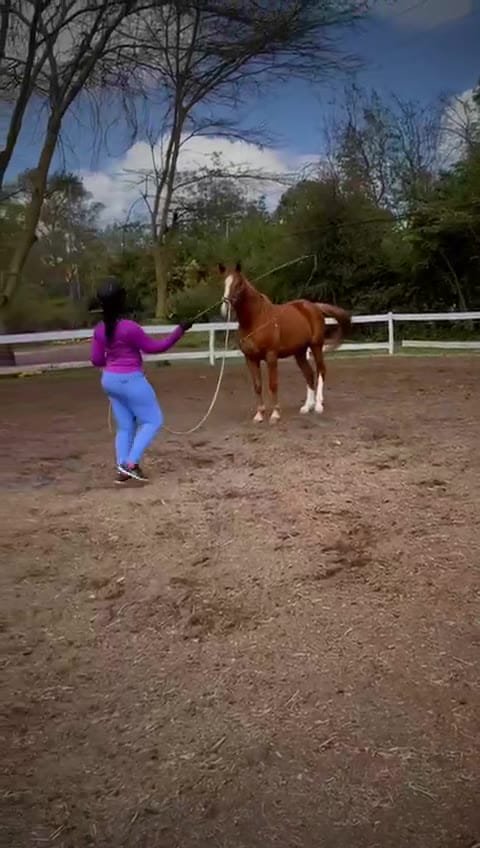
You haven’t shown where your space ends. Clear, calm and consistent works. Shouting and pulling never do.
Nobody gets on a horse. Every session is leading, non-verbal communication and watching the herd, with the facilitator in control of every horse at all times.
Approach from the side, no sudden moves, closed shoes and long trousers. And one rule that matters more than the rest: you can step out at any time. Observation counts.

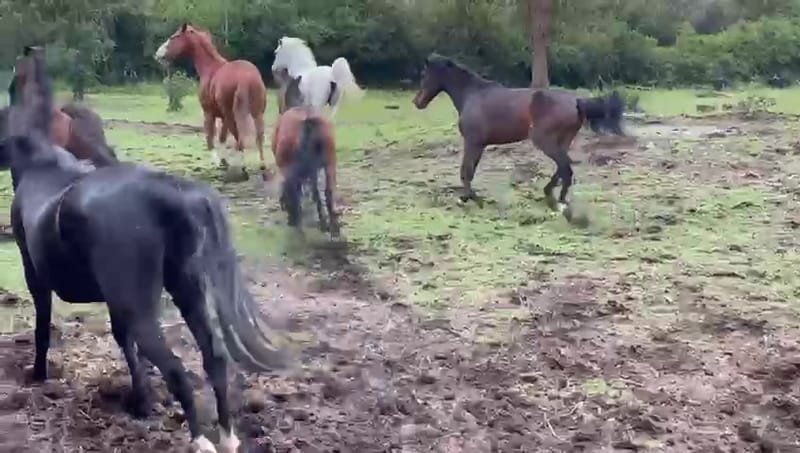
Before anyone holds a rope, the group watches the herd from the rail: who moves whom, who gives way, who the others settle beside.
Every exercise is shown before anyone tries it. Only trained, calm horses are used, vetted by Hardy Stud, never stallions, and the facilitator holds control of each one throughout.
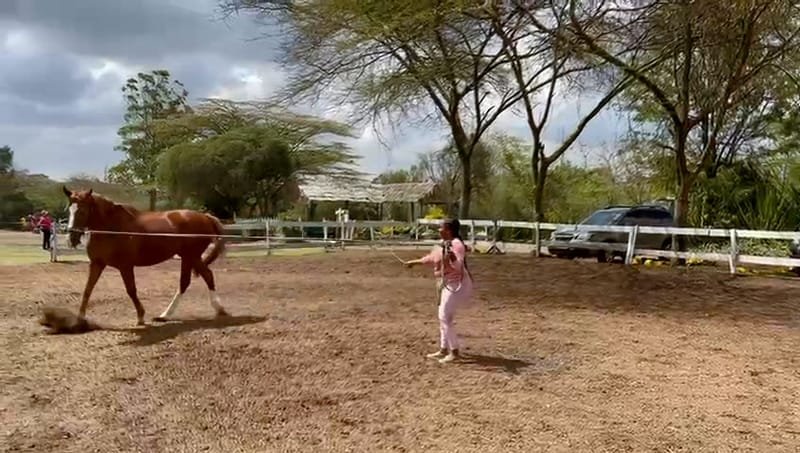
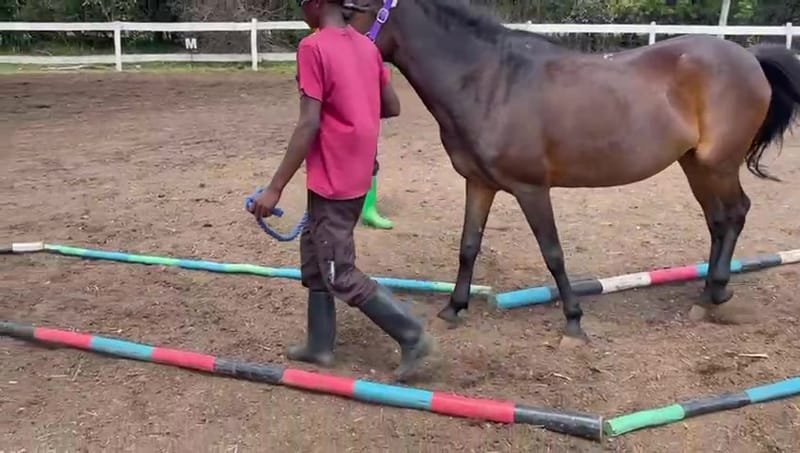
Then each student leads a horse one to one. A horse walks with you because you are clear, not because you pull harder, and it soon shows which of the two you were doing.
Posture, pace and where you stand ask a horse to move off, slow down or stay out of your space. Water every 30 minutes, in the shade tent; if it rains, the session moves to a workshop in the stables.
The morning ends in a circle, with a private check-in for anyone who wants one. Then the question goes into the journal.
When did your horse stop following you, and what were you doing just before?

Students discover their leadership style in real time.Why equine-assisted learning
A lecture on leadership waits for the exam. A horse answers in seconds, to every student, with no title to hide behind: you act, it responds, you adjust and try again. That loop is the whole morning.
A certified facilitator, horses chosen for temperament, and a short kit list every parent can check.
Certified equine-assisted learning practitioner. She facilitates every session; schools can ask for her certification before they book.

Trained, calm horses only, vetted by Hardy Stud. Never stallions. The facilitator controls every horse at all times.
Every hazard in the pen, from a kick to the midday sun, is in our risk assessment for Hardy Stud.
Read RA01, Hardy StudThe rest are on the FAQ page.

A 15-minute call. We can send the facilitator’s certification and RA01, the risk assessment for Hardy Stud, and walk you through the learning outcomes and availability for 2027.